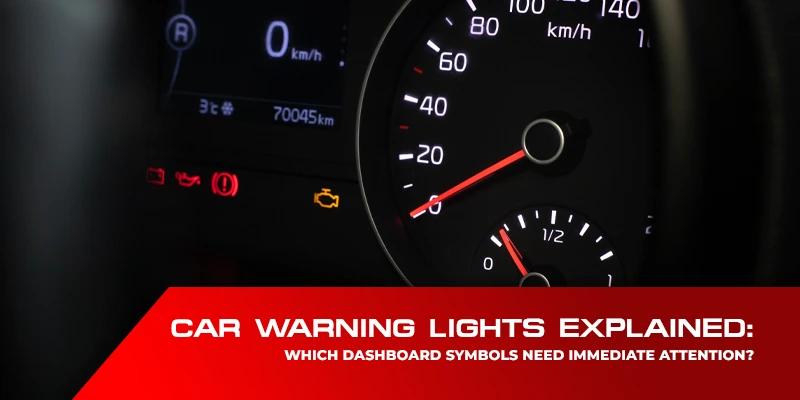
Modern vehicles are equipped with advanced monitoring systems that continuously check important components, including the engine, brakes, battery, tyres, and cooling system. When something requires attention, the vehicle displays a warning symbol on the dashboard to alert the driver.
However, not every warning light indicates the same level of urgency. Some symbols simply show that a vehicle feature is active, while others indicate mechanical problems that could affect driving safety or cause expensive damage.
Understanding car warning lights meaning is essential for responsible vehicle ownership. Ignoring an important dashboard warning can turn a minor mechanical issue into a major repair, particularly when driving in Dubai's demanding climate.
From the engine warning light to oil pressure, battery, brake, and tyre pressure indicators, knowing what these symbols represent can help you make informed decisions.
This car dashboard symbols guide explains the most common warning lights, what they indicate, and when your vehicle needs immediate professional attention.
What Do Different Dashboard Warning Light Colours Mean?
Before identifying individual dashboard warning symbols , it is important to understand their colours. Most modern vehicles use a colour-coded warning system to communicate the urgency of a particular issue.
Red Warning Lights
Red car warning lights generally indicate serious problems that require immediate attention. These may include low engine oil pressure, overheating, or brake system faults.
If a red warning light appears while driving, safely pull over and stop the vehicle when necessary. Continuing to drive could cause mechanical damage or compromise safety.
Yellow or Amber Warning Lights
Yellow warning lights on dashboard usually indicate a fault, maintenance requirement, or system that needs inspection soon.
Examples include the check engine light, tyre pressure warning, and ABS indicator. Depending on the warning and vehicle behaviour, you may be able to drive carefully to a workshop.
Green and Blue Warning Lights
Green and blue indicators generally show that a particular vehicle feature is active or operating.
Examples include headlights, high beams, cruise control, and turn indicators. These lights usually do not indicate mechanical problems.
Common Dashboard Warning Symbols and Their Meanings
Understanding the following dashboard warning lights UAE motorists commonly encounter can help you recognise potential problems before they become serious.
1. Engine Warning Light
The check engine light usually appears as an engine-shaped symbol. Its engine warning light meaning can vary depending on the fault detected by the vehicle's electronic control unit (ECU).
Possible causes include faulty oxygen sensors, ignition problems, fuel system issues, loose connections, or emissions system faults.
A steady light generally requires prompt diagnostic inspection. A flashing check engine light can indicate a serious misfire that may damage the catalytic converter.
Solution: Arrange a computer diagnostic scan to identify the stored fault codes. If the light flashes or the engine runs abnormally, stop safely and arrange professional assistance.
2. Engine Oil Pressure Warning Light
This symbol usually resembles an oil can with a dripping drop. It indicates that the engine oil pressure may be too low to provide proper lubrication.
Insufficient oil pressure can cause excessive friction, overheating, and serious internal engine damage.
Solution: Stop safely and switch off the engine immediately. Check the oil level only when it is safe to do so. If the warning remains, arrange professional inspection rather than continuing to drive.
3. Engine Temperature Warning Light
The temperature warning symbol typically features a thermometer above wavy lines. It indicates that the engine coolant temperature is too high.
In Dubai, extreme ambient temperatures and heavy traffic can place additional demands on the cooling system.
Possible causes include coolant leaks, radiator problems, faulty thermostats, damaged water pumps, or cooling fan failures.
Solution: Stop safely, switch off the engine, and allow it to cool. Never open the radiator cap while the system is hot. Have the cooling system inspected before continuing your journey.
4. Battery or Charging System Warning Light
The battery warning symbol indicates a possible problem with the vehicle's charging system.
Although it resembles a battery, the warning does not necessarily mean the battery itself is faulty. Possible causes include alternator problems, damaged wiring, loose connections, or a broken drive belt.
Solution: Avoid unnecessary electrical usage and arrange a safe inspection. If the warning remains illuminated while driving, the vehicle may eventually lose electrical power. Seek professional assistance.
5. Brake System Warning Light
The brake warning light usually appears as an exclamation mark inside a circle or the word BRAKE.
It may indicate that the parking brake is engaged, the brake fluid level is low, or there is a problem with the braking system.
Brake-related warnings should never be ignored because they can affect stopping performance.
Solution: Check that the parking brake is fully released. If the warning remains illuminated, stop safely and arrange an immediate brake system inspection. Do not continue driving if braking performance is affected.
6. Anti-Lock Braking System (ABS) Warning Light
The ABS warning symbol usually displays the letters ABS inside a circle.
It indicates a possible fault in the anti-lock braking system, which helps prevent wheel lock-up during sudden braking.
Possible causes include faulty wheel speed sensors, damaged wiring, or ABS module problems.
Solution: Have the ABS system inspected using appropriate diagnostic equipment. Conventional braking may remain available in some cases, but the anti-lock function may not work correctly.
7. Tyre Pressure Monitoring System (TPMS) Warning Light
The TPMS symbol resembles a tyre cross-section with an exclamation mark.
It indicates that one or more tyres may have insufficient air pressure or that the monitoring system has detected a fault.
In Dubai, changing temperatures and prolonged driving can influence tyre pressure. Incorrect inflation can affect handling, braking, and tyre wear.
Solution: Check all tyre pressures when the tyres are cold and adjust them according to the manufacturer's recommendations. Inspect for punctures or leaks if the warning continues.
8. Airbag Warning Light
The airbag warning symbol usually resembles a seated person with a circular shape in front.
It indicates a possible fault in the supplemental restraint system, which includes airbags and related safety components.
Possible causes include faulty sensors, damaged wiring, or seatbelt pretensioner problems.
Solution: Arrange a professional diagnostic inspection. If the warning remains illuminated, the airbags or related safety systems may not function as intended during an accident.
9. Power Steering Warning Light
This symbol generally displays a steering wheel with an exclamation mark.
It indicates a possible problem with the power steering system, which helps reduce the effort required to turn the steering wheel.
Depending on the vehicle, the issue may involve an electric steering motor, sensor, wiring, or hydraulic components.
Solution: Have the steering system inspected promptly. If steering becomes unusually heavy or difficult, stop safely and arrange vehicle recovery.
10. Low Fuel Warning Light
The low fuel warning symbol usually resembles a fuel pump.
It illuminates when the remaining fuel reaches a low level, indicating that the vehicle needs refuelling.
Driving regularly with very little fuel can affect fuel pump operation in some vehicles and increase the risk of running out of fuel.
Solution: Refuel as soon as possible using the recommended fuel type.
What Should You Do When a Dashboard Warning Light Appears?
When a warning symbol appears, the correct response depends on its colour, the vehicle's behaviour, and the manufacturer's instructions.
Follow these precautions:
- Identify the warning: Check the symbol and consult your vehicle's owner's manual.
- Assess the urgency: Red warnings generally require immediate attention, while yellow warnings usually indicate a fault that needs prompt inspection.
- Check vehicle behaviour: Notice unusual noises, vibrations, overheating, reduced power, or changes in braking.
- Stop when necessary: Safely pull over if a serious warning appears.
- Arrange diagnostics: Contact a qualified workshop to identify and resolve the underlying problem.
Avoid resetting warning lights without identifying the cause. Turning off an indicator does not necessarily mean the fault has been repaired.
Why Are Dashboard Warning Lights Important in Dubai?
Dubai's driving environment can place additional demands on different vehicle systems.
High temperatures can affect cooling system performance, while dusty conditions may contribute to air filter contamination. Frequent stop-and-go traffic can also increase demands on braking and cooling components.
For this reason, understanding dashboard warning lights UAE drivers encounter is particularly important.
Regular vehicle inspections, scheduled maintenance, and prompt attention to warning indicators can help reduce unexpected breakdowns and support safer driving.
How Can You Prevent Dashboard Warning Lights?
Not every warning light can be prevented, but regular maintenance can help identify developing problems.
Follow Scheduled Servicing
Routine inspections help technicians identify potential engine, transmission, braking, and electrical problems.
Monitor Fluid Levels
Check engine oil, coolant, brake fluid, and other essential fluids according to manufacturer recommendations.
Maintain Your Battery
Inspect battery condition, charging performance, and electrical connections periodically.
Check Tyre Pressure
Maintain the recommended tyre pressure and inspect tyres for damage or uneven wear.
Address Warning Lights Early
Do not ignore persistent warning indicators. Early diagnostics can prevent minor faults from developing into expensive repairs.
Frequently Asked Questions
1. What do car warning lights mean?
Car warning lights indicate the operating status of vehicle systems or alert drivers to potential mechanical, electrical, or safety problems. Their meanings depend on the symbol, colour, and vehicle model.
2. Which dashboard warning lights require immediate attention?
Red oil pressure, engine temperature, and serious brake system warnings generally require immediate attention. Stop safely and follow the manufacturer's instructions.
3. Can I drive with yellow warning lights on my dashboard?
Some yellow warnings allow careful driving to a workshop, but others may require immediate attention depending on the fault. Always consult the owner's manual.
4. What does a flashing check engine light mean?
A flashing check engine light can indicate a serious engine misfire that may damage the catalytic converter. Avoid continued driving and arrange professional assistance.
5. Why do dashboard warning lights appear when starting a car?
Many warning indicators illuminate briefly during the ignition self-check process. They should normally switch off after the engine starts. Persistent warnings may indicate a fault.
6. Can a diagnostic scan identify dashboard warning light problems?
Yes. A diagnostic scan can retrieve stored fault codes and provide useful information about affected vehicle systems. Further physical testing may be necessary to confirm the exact cause.
Keep Your Vehicle Safe with Royal Swiss Auto Xpress
Dashboard warning lights are your vehicle's way of communicating potential problems. Understanding these indicators and responding promptly can help protect important components and maintain driving safety.
At Royal Swiss Auto Xpress, we provide comprehensive automotive solutions, including advanced computer diagnostics, engine inspections, electrical system checks, brake servicing, battery inspections, cooling system maintenance, and general vehicle repairs.
Whether you are dealing with red car warning lights , persistent yellow dashboard indicators, or an unfamiliar engine warning symbol, our technicians can help identify the underlying issue and recommend the appropriate repair.
Don't ignore the warning signs. Give your vehicle the professional attention it needs.
Reserve your vehicle inspection with Royal Swiss Auto Xpress today and drive with greater confidence on Dubai's roads.