
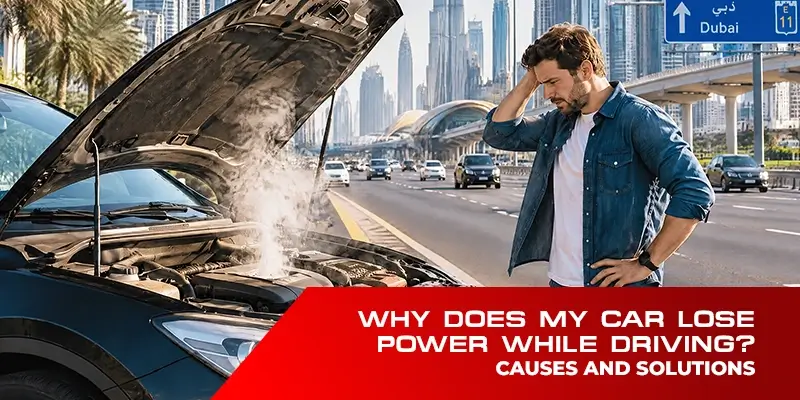
A vehicle's engine is designed to deliver consistent power for smooth acceleration and reliable performance. However, if your car suddenly feels slower, struggles to accelerate, or fails to respond when you press the accelerator, it may indicate an underlying mechanical or electrical problem.
Experiencing a situation where your car loses power while driving can be frustrating and potentially dangerous, particularly when overtaking or merging onto highways. Several factors can contribute to a loss of engine power , including fuel delivery problems, restricted airflow, faulty sensors, ignition failures, transmission issues, and overheating.
Understanding why your car is losing power can help you recognise warning signs, identify potential problems, and arrange the appropriate repairs before further damage occurs.
What Does It Mean When Your Car Loses Power?
Power loss occurs when the engine cannot deliver its normal performance under driving conditions. You may notice slower acceleration, difficulty maintaining speed, engine hesitation, or reduced responsiveness.
A car that struggles to accelerate may have problems involving its fuel system, air intake, ignition components, exhaust system, or engine management electronics.
Sometimes, power loss happens gradually. In other cases, the vehicle may suddenly enter limp mode, reducing engine performance to protect important components.
Common Causes of Car Power Loss
Understanding the common engine power loss causes can help vehicle owners recognise problems early.
1. Clogged Fuel Filter
The fuel filter prevents dirt and contaminants from entering the engine. Over time, accumulated debris can restrict fuel flow, preventing the engine from receiving sufficient fuel.
Common symptoms include slow acceleration, engine hesitation, reduced performance, and difficulty maintaining highway speeds.
Solution: A technician should inspect the fuel delivery system and replace the filter if it is clogged or due for replacement.
2. Faulty Fuel Pump
The fuel pump delivers fuel from the tank to the engine at the required pressure. If it becomes weak or develops an electrical fault, the engine may experience inconsistent fuel delivery.
You may notice engine sputtering, difficulty starting, sudden acceleration problems, or unexpected stalling.
Solution: Fuel pressure testing and electrical inspection can identify pump-related problems. A damaged fuel pump may require replacement.
3. Dirty or Clogged Air Filter
The engine requires sufficient clean air for efficient combustion. A clogged air filter restricts airflow and can affect acceleration and overall engine performance.
This is particularly relevant in Dubai, where dust and sand can accumulate quickly.
Solution: Inspect the air filter regularly and replace it when necessary to maintain proper airflow.
4. Faulty Mass Airflow Sensor
The mass airflow (MAF) sensor measures the amount of air entering the engine. The ECU uses this information to calculate the appropriate fuel supply.
A faulty or dirty sensor can provide inaccurate readings, affecting the air-fuel mixture and causing car acceleration problems .
Symptoms include rough idling, hesitation, increased fuel consumption, and check engine warnings.
Solution: A diagnostic scan can identify sensor faults. Depending on its condition, the MAF sensor may require cleaning or replacement.
5. Failing Spark Plugs or Ignition Coils
Spark plugs ignite the air-fuel mixture in petrol engines, while ignition coils provide the electrical voltage required for combustion.
Worn spark plugs or faulty ignition coils can cause engine misfires, vibrations, rough acceleration, and reduced performance.
Solution: Have the ignition system inspected. Replace worn spark plugs or damaged ignition coils with suitable components.
6. Clogged Catalytic Converter
The catalytic converter reduces harmful exhaust emissions. However, internal damage or contamination can restrict exhaust flow and create excessive back pressure.
This can contribute to loss of engine power , particularly during acceleration.
Common symptoms include sluggish performance, unusual exhaust smells, excessive exhaust heat, and warning lights.
Solution: Professional exhaust inspection and back-pressure testing can identify restrictions. A damaged catalytic converter may require replacement.
7. Faulty Oxygen Sensor
The oxygen sensor monitors oxygen levels in exhaust gases and sends information to the ECU to regulate the air-fuel mixture.
If the sensor develops a fault, incorrect readings can affect combustion and fuel efficiency.
Symptoms include poor acceleration, increased fuel consumption, rough engine operation, and check engine warnings.
Solution: Diagnostic testing can identify oxygen sensor problems. Replacing a faulty sensor can help restore proper engine management.
8. Transmission Problems
The transmission transfers engine power to the wheels. If it develops problems involving fluid condition, clutches, solenoids, or internal components, the vehicle may struggle to accelerate.
Warning signs include delayed gear changes, jerking, unusual noises, and engine revving without corresponding acceleration.
Solution: A professional transmission inspection can identify the underlying fault and determine whether servicing, component replacement, or further repairs are necessary.
9. Engine Overheating
High temperatures can place additional stress on an engine, particularly in Dubai's demanding climate. When overheating occurs, the vehicle may reduce engine performance to protect important components.
Warning signs include rising temperature readings, coolant warnings, steam, and reduced acceleration.
Solution: Stop safely and switch off the engine if it overheats. Never open the radiator cap while the system is hot. Have the radiator, coolant, thermostat, water pump, and cooling fans inspected.
10. Turbocharger Problems
Turbocharged engines use exhaust gases to increase the amount of air entering the engine. A damaged turbocharger, boost leak, or faulty actuator can reduce engine output.
Symptoms include weak acceleration, unusual turbo noises, reduced power, and excessive exhaust smoke.
Solution: Professional inspection can identify boost leaks, damaged hoses, and turbocharger faults. Necessary components should be repaired or replaced.
What Should You Do When Your Car Suddenly Loses Power?
A car that suddenly loses power while driving requires immediate attention. Road safety should always come first.
- Stay calm: Avoid aggressive acceleration or sudden steering movements.
- Move safely: Carefully move away from traffic and stop in a safe location.
- Check warning lights: Look for engine, oil pressure, battery, and temperature warnings.
- Avoid continued driving: Stop if you notice overheating, severe power loss, unusual noises, or oil pressure warnings.
- Arrange assistance: Contact roadside assistance or a qualified workshop if the vehicle cannot be driven safely.
How Is Engine Power Loss Diagnosed?
Identifying the exact reason behind a car losing power while driving requires professional inspection because several mechanical and electronic faults can produce similar symptoms.
A diagnostic process may include:
- Computer diagnostics: Scanning the ECU for stored fault codes and sensor readings.
- Fuel system testing: Checking fuel pressure, filters, injectors, and pump performance.
- Air intake inspection: Examining air filters, intake pipes, and airflow sensors.
- Ignition testing: Inspecting spark plugs, ignition coils, and electrical connections.
- Exhaust inspection: Checking for restrictions and catalytic converter problems.
- Transmission assessment: Evaluating fluid condition, gear changes, and transmission faults.
- Cooling system inspection: Checking coolant circulation and engine operating temperatures.
Combining diagnostic equipment with physical inspections helps technicians identify the underlying problem and recommend suitable repairs.
How Can You Prevent Car Power Loss?
Although not every mechanical failure can be prevented, regular maintenance can reduce the likelihood of common engine power loss causes .
Replace Filters Regularly
Clean air and fuel filters support proper airflow and fuel delivery. Follow the manufacturer's recommended replacement intervals.
Maintain the Ignition System
Inspect spark plugs and ignition coils periodically, particularly if you notice misfires or rough acceleration.
Monitor Engine Temperature
Check coolant levels and address cooling system problems promptly to prevent overheating.
Use the Correct Engine Oil
Manufacturer-recommended engine oil helps maintain lubrication and supports reliable engine operation.
Follow Scheduled Maintenance
Regular servicing helps identify developing problems in the fuel system, transmission, cooling system, and other important components.
Frequently Asked Questions
1. Why does my car lose power while driving?
Common causes include clogged fuel filters, faulty fuel pumps, restricted air filters, damaged spark plugs, sensor faults, transmission problems, and engine overheating.
2. Why does my car struggle to accelerate?
Poor acceleration can result from restricted fuel delivery, insufficient airflow, ignition problems, turbocharger faults, or transmission issues.
3. Can a dirty air filter cause engine power loss?
Yes. A clogged air filter restricts airflow into the engine, potentially affecting combustion and reducing performance.
4. Why does my car suddenly lose power and then recover?
Intermittent power loss may be caused by faulty sensors, inconsistent fuel delivery, electrical problems, or temporary activation of limp mode.
5. Is it safe to drive when my car loses power?
It depends on the severity. Sudden power loss, overheating, oil pressure warnings, or severe misfires require you to stop safely and arrange professional assistance.
6. How can I prevent car acceleration problems?
Follow regular servicing schedules, replace filters when required, inspect ignition components, monitor engine temperature, and address warning lights promptly.
Restore Your Vehicle's Performance with Royal Swiss Auto Xpress
A vehicle experiencing reduced acceleration or unexpected engine power loss requires proper diagnosis and professional attention. Royal Swiss Auto Xpress provides comprehensive automotive solutions to help Dubai drivers maintain vehicle performance, reliability, and safety.
From advanced computer diagnostics and engine inspections to fuel system repairs, transmission servicing, cooling system maintenance, and electrical troubleshooting, our technicians focus on identifying the underlying cause of vehicle problems.
Whether your car loses power while driving , struggles to accelerate, or experiences recurring engine performance issues, our team can help assess your vehicle and recommend appropriate repair solutions.
Don't allow minor performance issues to develop into expensive mechanical problems.
Book your vehicle inspection with Royal Swiss Auto Xpress today and keep your vehicle performing at its best on Dubai's roads.